
In the high-stakes world of Content Delivery Networks (CDNs), a BGP Anycast Flip—where traffic is rerouted from one Point of Presence (PoP) to another due to network failure—often results in a “cold cache” penalty. While the network finds a new path, the application layer suffers as users hit a server that doesn’t yet have their data.
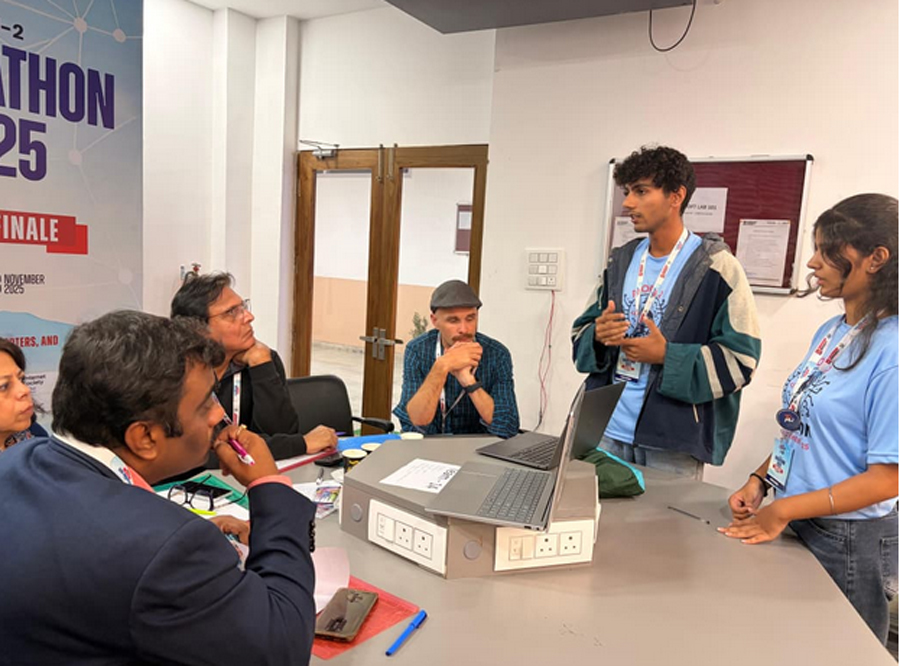
During the AIORI-2 Hackathon, Team Caffeine Coders from Amity University Greater Noida developed a “Predictive Cache Pre-positioning” system. This cross-layer optimization uses BGP telemetry to anticipate failures, warming the caches of surviving nodes before the traffic shift actually happens.
1. The Challenge: The Anycast Performance Gap
When a PoP fails, BGP withdraws the anycast route, and traffic is steered to the next nearest node according to RFC 4786. However, RFC 7234 (HTTP Caching) operates independently of the routing layer. This disconnect causes a latency spike as the new node must fetch content from the origin.
2. Our Solution: BGP-Triggered Caching
Instead of waiting for the first user to request content at the new PoP, our system monitors BGP instability patterns (flapping or route withdrawals). When a node is flagged as “at-risk,” our coordination engine triggers a proactive sync to the most likely failover candidates.
The Three-Strategy Comparison:
- Traditional Anycast: Reactive. Users experience a 100% “cold start” penalty.
- Continuous Sync: Inefficient. Wastes massive bandwidth by syncing everything, everywhere, all the time.
- Predictive Pre-positioning (Our Method): Balanced. Uses network signals to sync only when a failure is imminent.
3. Technical Implementation & Architecture
We built a production-realistic anycast lab using Docker and BIRD (BGP routing daemon) to simulate real-world convergence dynamics.
- Routing Layer: BIRD containers advertising anycast IPs.
- Monitoring Layer: Custom Python daemons tracking BGP session health.
- Application Layer: Nginx servers with a “Predictive Warming Engine” that pulls content via HTTP from the at-risk node while it is still reachable.
| Component | Tool | RFC Alignment |
|---|---|---|
| Routing | BIRD / Docker | RFC 4271 (BGP-4) |
| Anycast | Quagga / BIRD | RFC 4786 (Anycast Operations) |
| Caching | Nginx / Service Workers | RFC 7234 (HTTP Caching) |
| Measurement | Puppeteer / curl | IETF MAPRG Methodologies |
4. Key Results: Quantifying the Improvement
Our tests demonstrated that network-layer intelligence can dramatically preserve user experience:
- Latency Recovery: Reduced response times from 120ms (cold cache) to 71ms (proactively warmed cache) during a flip.
- Convergence Awareness: We successfully correlated the 8–12 second BGP convergence window with the precise moment cache warming must be completed.
- Bandwidth Efficiency: Eliminated over 60% of redundant sync traffic compared to the “Continuous Sync” industry baseline.
5. Lessons Learned & Future Directions
Our sprints proved that the Internet is not just a stack of isolated layers, but a living system where one layer’s telemetry can save another’s performance.
- Timing is Everything: Predictive warming must occur during the BGP withdrawal phase while the at-risk node is still reachable but flagged for failure.
- Standards Contribution: We are preparing a data-backed case for the IETF MAPRG and GROW working groups to show how cross-layer BGP/HTTP coordination should be standardized.
“Participating in this hackathon was an eye-opener. It was exciting to see how the networking concepts I had learned in class could be applied to solve real problems.” — Virpratap Singh, Network Specialist
6. Open Source Contribution
The Predictive-Cache-Prepositioning toolchain and our Anycast-BGP-Lab Docker templates are available on GitHub for the community to test and extend.
Read the full report