Location: St. Joseph’s College of Engineering, Chennai
Program: Advanced Internet Operations Research in India (AIORI) Regional Faculty Workshop
Associated Partner: Internet Society – India Kolkata Chapter
On July 26, 2025, St. Joseph’s College of Engineering in Chennai hosted a day of in-depth technological exchange and forward-thinking conversation. The school was thrilled to host the AIORI Regional Faculty Workshop, which was a big part of the Advanced Internet Operations Research in India (AIORI) program. The workshop was carefully planned to focus on important parts of the digital world, such as Internet standards, important ways to monitor networks, and the need to improve India’s digital infrastructure. This event successfully brought together faculty, students, and experienced internet experts for a full day of learning and technical demonstrations. It strongly reflected AIORI’s main goal of connecting academic institutions directly with real-world research and national infrastructure projects.
The workshop took place in a collaborative and welcoming setting, thanks to the participation of institutions from all over Chennai, such as Sathyabama Institute of Science and Technology, Kings College of Engineering, K. Ramakrishnan College of Technology, VIT Chennai, Loyola-ICAM College of Engineering and Technology, Roever Engineering College, Agni College of Technology, Anand Institute of Higher Technology, Panimalar Engineering College, SRM Institute of Science and Technology, M.A.M. College of Engineering and Technology, KCG College of Technology, and others who add a lot to the region’s academic and technical fabric. Their participation and continuous support for capacity-building projects gave the day’s conversations a sense of community and shared purpose.
The program gave participants a one-of-a-kind beneficial chance to learn about advanced internet engineering ideas, important governance frameworks, and new, useful ways to measure things.
Building a Robust Digital Foundation
The event began with an opening address that underscored the fundamental significance of a deep understanding of protocols, routing, and standardization for successfully developing and maintaining robust digital infrastructure. Speakers emphasized the importance of active academic participation in national digital projects, positioning the students and faculty as pivotal players in India’s technological advancement.
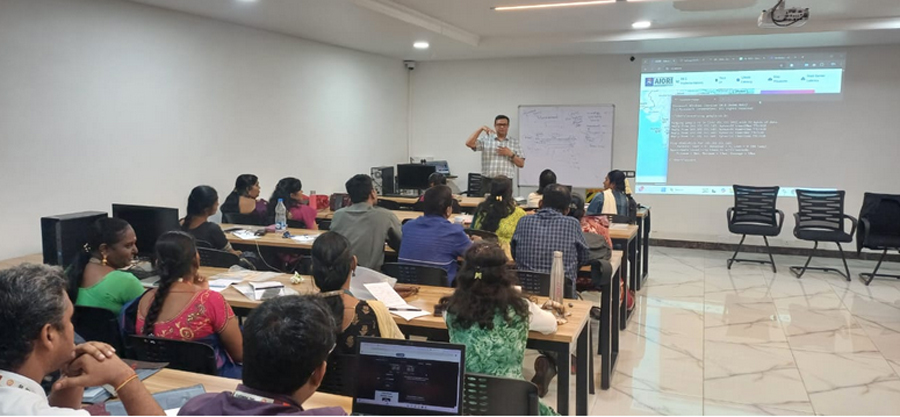
The first technical session, a foundational component of the day, was led by Mr. Anand Raje (Chair, Internet Society – India Kolkata Chapter). He delivered a detailed and illuminating session on AIORI’s mission, clearly explaining the immense significance of systematic internet measurement for both fundamental research and practical performance optimization. Students were introduced to complex yet critical concepts such as latency measurement and the analysis of network resilience.
Mr. Raje then elaborated extensively on the core functionality of the Raspberry Pi–based AIORI Anchors. These purpose-built nodes are strategically deployed at academic institutions across the country to collect continuous, real-time performance data, which then contributes to a unified national observability framework. The session emphasized how even seemingly small devices can play a meaningful role in improving the quality and reliability of India’s internet infrastructure. A total of 24 AIORI Anchors were deployed as part of this initiative, giving students and faculty alike a sense of pride in being part of a nationwide measurement effort.
Mobilizing Talent and Informing Policy
Following the technical deep dive, Mr. Anupam Agrawal (Chair – IIFON) conducted a focused and inspiring session for AIORI Ambassadors. This segment included a practical hackathon orientation and guidance on student workshop engagement. He clearly explained the various ways students and faculty could actively participate in AIORI initiatives—whether by contributing to technical documentation, joining collaborative research projects, or taking part in national hackathons. This session successfully inspired participants to adopt a proactive approach to learning, seamlessly combining their theoretical technical expertise with critical practical application.
Subsequent sessions provided a vital macro-level perspective, highlighting the involvement of various national stakeholders, including contributions informed by the frameworks of MeitY and NIXI. These discussions illustrated the critical intersection where governance, policy, and research meet technical implementation to collectively build a robust and resilient digital infrastructure. They reinforced the necessity of strong collaboration between academic institutions, government bodies, and dedicated research organizations to achieve national digital goals.
Hands-On Insight and Global Influence
A key highlight that cemented the day’s learning was the technical demonstration of AIORI Anchors by Mr. Anand Raje. Students and faculty were given a clear view of the practical process, observing how the Raspberry Pi nodes are configured to collect real-time network metrics, process the raw data, and subsequently generate accessible insights via the AIORI dashboards. This highly effective demonstration successfully bridged the gap between abstract theoretical knowledge and concrete, real-world implementation, providing immediate context for their studies.
Engagement with global standards was also a crucial component. Mr. Anupam Agrawal led a session on the Internet Engineering Task Force (IETF), which is responsible for the technical standards that define the internet. He explained how students and researchers can participate in these influential international forums, contribute to working groups, and directly influence global internet protocols. The session powerfully highlighted the importance of aligning local academic research with international best practices and standards development.
6th Regional Faculty Workshop – CHENNAI
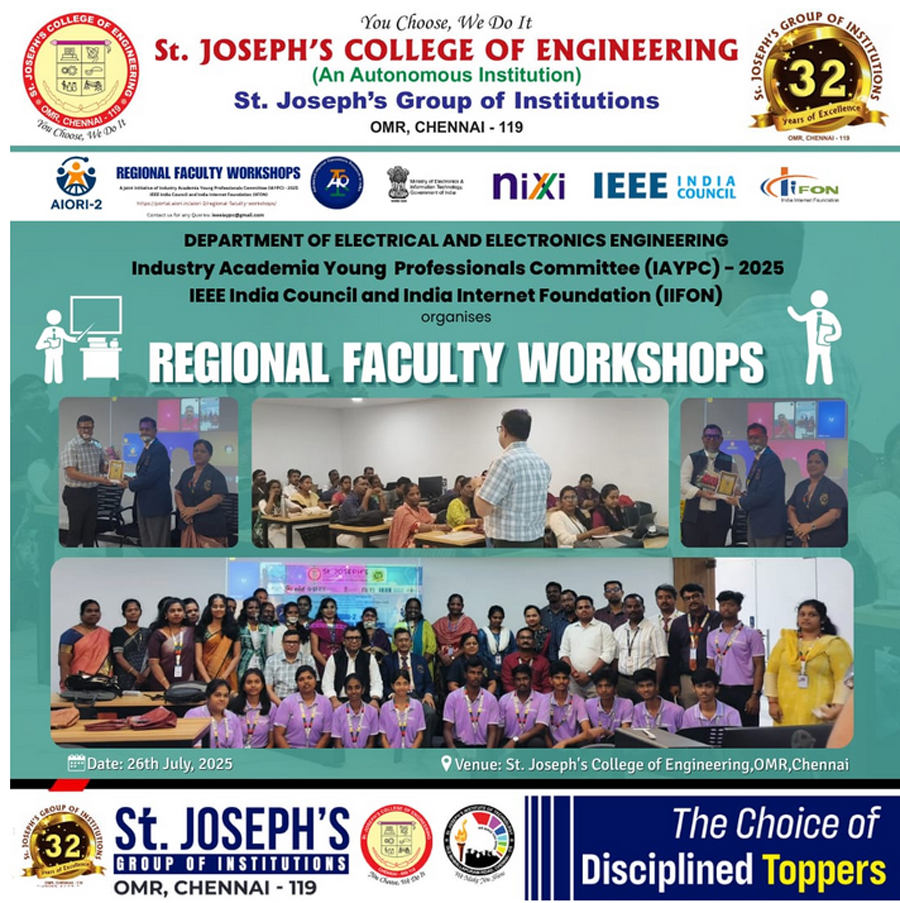
St. Joseph’s College of Engineering hosted this workshop on 26 July 2025, with 35 faculty members from 20 engineering institutions participating. The successful AIORI 2 Ambassador Program saw A. R. Danila Shirly named the AIORI Ambassador. The trained faculty leveraged their expertise to conduct two national student workshops, reinforcing the AIORI Measurement Network in the region and promoting its growth.
A Commitment to Collaborative Research
The intensive and insightful workshop concluded with a final session and the distribution of certificates, formally recognizing the active participation and dedication of the students and faculty. The event successfully achieved its goal by combining crucial technical knowledge, essential governance insight, and practical, hands-on demonstration.
The deployment of the Raspberry Pi–based AIORI Anchors at St. Joseph’s College of Engineering serves as a powerful, enduring example of how academic institutions can move beyond the classroom to participate in a national-scale observability project, contributing invaluable, real-time data on latency and network performance. The warmth, curiosity, and sincerity with which students engaged throughout the day reflected a genuine eagerness to support India’s digital transformation.
The Internet Society – India Kolkata Chapter is very delighted to have helped with the Chennai AIORI Workshop as an Associate Partner. Our active participation, guided by the Internet Society’s objective to promote the open development and beneficial use of the Internet, directly helped spread information, teach technical skills through hands-on experience, and get people involved in important national digital projects. We are very grateful for the leadership of AIORI, IIFON, MeitY, NIXI, and the very dedicated teachers and students at St. Joseph’s College of Engineering. We look forward to maintaining this important partnership to improve the digital environment through meaningful research and strong community involvement.