AI-Driven Automation & QoS Assurance – AIORI Perspective
Introduction AIORI is stepping into the next phase of networking evolution, where systems are no longer just monitored but intelligently controlled. Artificial Intelligence (AI) is enabling networks to become self-optimizing, continuously adapting to maintain Quality of Service (QoS). Guided by frameworks from the International Telecommunication Union, AIORI is exploring how automation can transform network performance. […]
AI-Powered Internet Measurement & Traffic Analysis – AIORI Perspective
Introduction AIORI is redefining how the Internet is measured, moving beyond traditional metrics into a world where Artificial Intelligence (AI) deciphers complex traffic behavior. The Internet today resembles a constantly shifting ecosystem, where patterns evolve by the second. AI brings the capability to understand this dynamic environment at scale. Aligned with global frameworks from the […]
AI in Networking & Internet Measurement: AIORI’s Vision Aligned with ITU
Introduction AIORI stands at the forefront of transforming how networks are understood, measured, and optimized. In an era where digital infrastructure behaves like a living system, constantly evolving and generating massive data streams, Artificial Intelligence (AI) becomes the brain that interprets and acts on this data. Aligned with global frameworks from the International Telecommunication Union, […]
Measuring Rural Internet Connectivity for Real-World Impact

Reliable Internet access today forms the backbone of education, communication, and digital growth. Yet, in many rural regions, connectivity remains inconsistent and poorly understood. The challenge is not only about providing access but also about understanding how well that access performs in real-world conditions. The AIORI (Advanced Internet Operations Research in India) initiative addresses this […]
Telemetry, Automation, and AI-Driven Network Governance
As networks grow more complex, operational data becomes both abundant and structured. The Internet Engineering Task Force has developed frameworks that make this data machine-readable and interoperable. Standards such as: RFC 7950: YANG Data Modeling Language RFC 8342: Network Management Datastore Architecture define how configuration and operational state are modeled. AI and Structured Telemetry YANG-based […]
Research and Large-Scale Internet Analysis in the IETF Ecosystem
Measurement becomes powerful when it scales. The research dimension of AI in networking is driven largely by the Internet Research Task Force, which complements the standards work of the Internet Engineering Task Force. Within this ecosystem, the Measurement and Analysis Research Group focuses on empirical analysis of Internet infrastructure, routing patterns, and traffic evolution. The […]
Standardized Measurement as the Foundation for AI in Networking
Artificial Intelligence in networking does not begin with neural networks or automation dashboards. It begins with measurement. Within the framework of the Internet Engineering Task Force and the Internet Research Task Force, the first principle is clear: before intelligence, there must be consistency. The IETF does not standardize AI models. Instead, it defines interoperable metrics, […]
Operationalizing Internet Resilience: The Role of Measurement in Strengthening India’s DNS Ecosystem High Level Thematic Dialogue | ICANN85 Event by NIXI

Operationalizing Internet Resilience: The Role of Measurement in Strengthening India’s DNS Ecosystem High Level Thematic Dialogue | ICANN85 Event by NIXI At ICANN85 in Mumbai, the National Internet Exchange of India (NIXI) hosted a high-level thematic panel discussion on AIORI (Advanced Internet Operations Research in India), an initiative focused on strengthening India’s Internet resilience through […]
CU Lab Inauguration

Strengthening India’s Internet Research Ecosystem Through Academia–Industry Collaboration The India Internet Foundation (IIFON) proudly announces the inauguration of the Advanced Research Laboratory on Internet Research Network at Chandigarh University, established in collaboration with the AIORI Project and the National Internet Exchange of India (NIXI). This milestone represents more than the launch of a laboratory. It […]
Solution report blog — Tech-sam
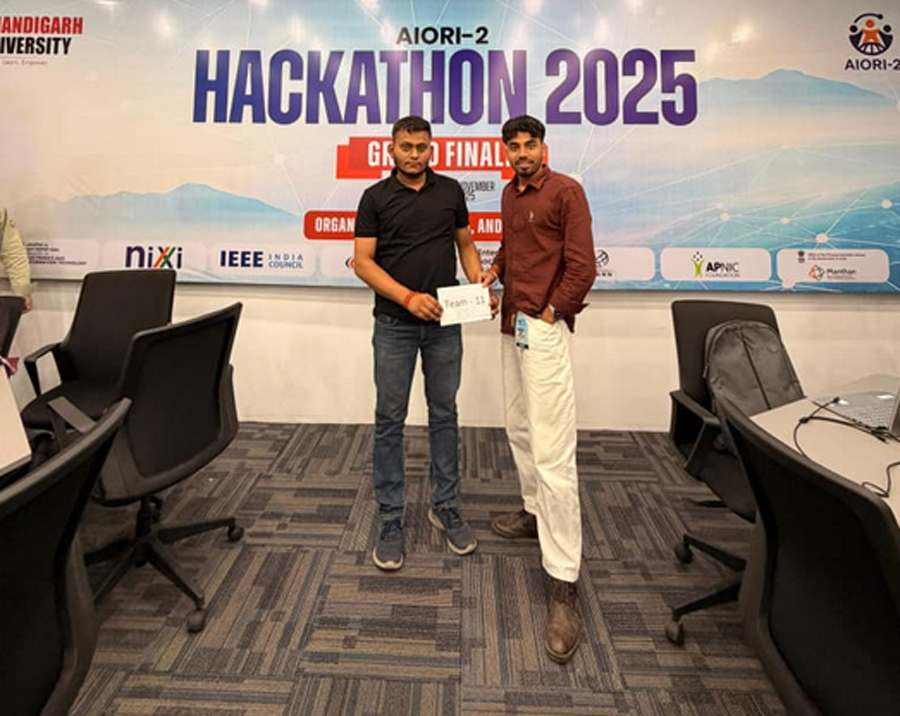
In the ever-accelerating race for internet speed, the “last mile” of performance often hides in the DNS resolution process. During the AIORI-2 Hackathon, our team from Sharda University tackled this bottleneck head-on. We didn’t just build a resolver; we engineered a Hyperfast DNS Load Balancer that leverages the parallel processing power of the AWS Cloud […]